Tuesday, January 19, 2010

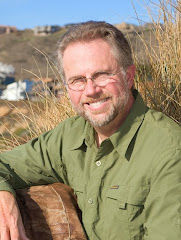
George Leonard

The memorial service for George Leonard will be February 28, 2010, at the Mill Valley Community Center, 180 Camino Alto, Mill Valley, California, from 3:00 pm until 6:00 pm. George passed away Tuesday, January 6, at his home in Mill Valley, California. He was 86.

During his life Mr. Leonard served in the US Army Air Corps as a combat fighter-bomber pilot in WWII and during the Korean War as an air intelligence officer. He was an editor and wrote extensively for Look Magazine and won many awards there as he covered the Civil Rights movement in the US and the rise of the Iron Curtain in Eastern Europe. He remains the most prolific writer ever for Esquire Magazine. His twelve major books included "Mastery", "The Ultimate Athlete", "The Silent Pulse", "Education and Ecstasy", "The Transformation", "The Way of Aikido", "Walking on the Edge of the World" and others. "Mastery" written in 1991, has never gone out of print and has been continuously stocked in book store throughout the US since its publication.

With Michael Murphy he co-founded Esalen Institute, and at the time of his passing was Esalen's president emeritus. He also co-founded ITP International and Aikido of Tamalpais. Taking up aikido at age 47 he went on to attain the rank of 5th degree black belt. It would be safe to say he was the most authored aikido sensei in the world. Arguably, he was (and possibly remains) the most influential person in the spreading of aikido awareness in the USA. He was recognized by Time magazine as the father of the human potential movement in the US, and was the individual who coined the phrase "the human potential movement."

On an afternoon in 1977 as he walked from his home to his dojo, George created the Samurai Game®. Since then the Game was copyrighted, solely owned by him and his wife Annie, and the Leonard Trust. The simulation has directly affected the lives of hundreds of thousands around the world, and indirectly touched millions with lessons of effective leadership and team work - greatly strengthening one's awareness and connection to a strong ethical code. A cadre of over thirty certified facilitators now spreads across the globe: Mexico to Poland to PR China to Taiwan to the UK and across the USA.

I met George in 1990. He agreed to become an Associate of Allied Ronin in the late 1990's. In 2000, I began serving him as his sole training and certification representative for the Game. Together we led many Samurai Games, most of them at his dojo in Mill Valley. He became my closest ally and, along with his wife, a dear friend. The work we did in codifying the Game and it's standards and methods of facilitator training and certification will continue, as will my service to their Trust in this regard. I promised him in 1994 that I would take the Game around the world. The fact is, though, that he and the Game have taken me around the world. His work directly touched many millions of people on every continent of the globe. The planet Earth is a better place in 2010 than it was in 1923 in no small measure because of this one man and his vision, his wholeheartedness, his commitment and his generosity.

Tax deductible contributions may be made in George Leonard's name at www.itp-international.org

Monday, January 18, 2010

An (y)Earful

Hello darkness, my old friend

I've come to talk with you again

Because a vision softly creeping

Left its seeds while I was sleeping

And the vision that was planted in my brain

Still remains

Within the sounds of silence.

-Simon & Garfunkel


It has been a full year, 2009, and with wonderful experiences: Mexico City and Brisbane Australia (twice each); Yi-lan County Taiwan and Brighton UK and Honolulu (once each); the aikido class for professors attending the Organizational Behavior Teacher Conference '09 at College of Charleston; the sixth consecutive year serving the University of Nevada Las Vegas; the three Samurai Game® Facilitator Training Courses held here in Petaluma; the outreach program for Aikido'ka dojo and sensei Frank Blocksburg in Grass Valley, CA; two Allied Ronin Leaders' Retreats; the Samurai Game® facilitator certification of Jenaro Pliego (jpfoxmx@yahoo.com.mx) (Mexico City), Dwight Min (dwitmin@hotmail.com) (Honolulu), Rev. Francis Briers (revfrancis@wildmail.com) (UK), and Paul Marshall (paul@cdrs.com.au) (Australia); and the release of the new Allied Ronin program available to organizations and the public which culminated in La Jolla, CA, six weeks ago as 130 executives and managers attended "The Art of Practice and the Event Network dojo". The next delivery of this new program will be January 12 in Seattle, this time "The Art of Practice and the USS JOHN C. STENNIS Dojo" with120 US Navy personnel attending. Thank you, Andi Burgis of Challenge-U for your courage in setting up the January program.


All of this makes grist for a lengthy article, but not this month. Rather, I invite you to participate in something incredibly profound; at least I think so. Something I found online and watched tonight, twice actually. Something that was delivered almost seven years ago with a thousand people participating. Of course, a few of you may have seen it. But so what! It's truly worth experiencing again.


The mission of Allied Ronin is: To Create Effective Leaders. In that regard much time and practice is dedicated to the art of listening - through an entire set of individual and collective faculties and capacities. Influence is the essence of leadership; and no matter the endeavor, listening is foundational to effective influence. I am particularly grateful to five people this past year whose lives significantly impacted this mission: Madeline Wade, Lisa Ludwigsen, Susan Hammond, Richard Strozzi-Heckler and George Leonard - all Associates of Allied Ronin. Each of these people has, in her or his own way, generously and sometimes unknowingly served me in my ability to listen. Their efforts, words, practices and lessons have encouraged me to listen with much more than my ears, i.e. with my hands and feet and back and heart, with my breath, with my eyes, in my reflections, with my sensitivity to nature that surrounds me, with an occasional glance at my skin as it ages or the feel of my knees when they hurt, and to (as Paul Simon and Art Garfunkel would say) the sound of silence. Take note: I didn't (and don't) always like what I was hearing from these five people. But here's the deal: one's like or dislike of what one is hearing is not what's at stake when it comes to listening. What's at stake is the fullness of life and the influence that that fullness has on the lives of others. This isn't theory; it's reality. You do understand that you are a leader, don't you? So the important question is: Do You Know You Are Being Followed? Ponder that a while, and it'll start to get under your skin. Then, take action on your answers, no matter what they are or how you feel about them.


Here is a link for you to hit. Spend the next 32 minutes of your life as a listener, and listen with all of your faculties. The presenter is an artist, a musician, Evelyn Glennie. She's deaf. But you wouldn't know it unless someone told you.


http://www.ted.com/talks/lang/eng/evelyn_glennie_shows_how_to_listen.html


If you search Wikipedia for Evelyn Glennie you will read:

"[She] has been profoundly deaf since age 12. This does not inhibit her ability to perform at the international level. She regularly plays barefoot for both live performances and studio recordings, to better "feel" the music. Glennie contends that deafness is largely misunderstood by the public. She claims to have taught herself to hear with parts of her body other than her ears. In response to criticism from the media, Glennie published Hearing Essay in which she personally discusses her condition."


A few last words before you hit the above link. What Evelyn Glennie is expressing in what you will experience during the next half hour holds an infinite number of possibilities when translated into all that we do in our work and play together. It has profound application to what we listen to daily, and not just with our ears. The mere fact that we do (and don't) listen she will call into question. Don't limit yourself to her music, which in and of itself is magnificent. That we hear others in our listening is paramount if we are to thrive. And so is that we hear ourselves - not only in what we say, but also in what we leave unsaid. Additionally, we ought attend to what our environment (the people, nature, our neighbors, friends, enemies and attachments) is expressing. We should train well, and strain well if need be, to listen to and hear what our insides are saying, and should attend to and feel that - not just with our emotions but with the very sinew that surrounds and holds those emotions. That to which we dedicate our bodies in the space of time we call life is important, but without listening we might miss it. The stuff of what Evelyn Glennie expresses has profound application to our every moment. And life is, after all, a string of moments.

The next half hour could be one of the most worthwhile half hours you have ever spent. If you find that not so, then call me (707-769-0328) and tell me I was wrong. I'll listen. In the meantime, enjoy!


And in the naked light I saw

Ten thousand people, maybe more

People talking without speaking

People hearing without listening

People writing songs that voices never share

And no one dared

Disturb the sounds of silence.


© Lance Giroux, 2010

Saturday, December 05, 2009

SOIL

Principle: The starting point of movement,

such as we find at either end of a measure

of length or a stretch of road.

- Aristotle (Metaphysics Book ∆, Chapter 1)

It's a clear California dusk, forty-eight hours after Thanksgiving. The sun is dropping fast tonight. My Arizona holiday week spent with four-dozen friends and family members is over. Things happen for me when I cross the state line and step onto Arizona soil. I don't know how to explain this, but the ground there has a certain familiarity, whether standing or when I fall, balance lost, on outstretched hands. I did both this trip. The dry Arizona air is familiar too, as are the odors of new rain and washed soil carried by it. This is the land from which I grew.

Passing through Joshua Tree National Park some days ago I found myself wondering how a person unfamiliar with the dessert southwest might perceive this arid open space. Lifeless? Actually, Joshua Tree is quite a forest, though not of fir or pine, redwood or spruce. But it's there and full of life; and as with opportunity, one has to pay attention and see it. It's all around and overwhelming, provided one pauses long enough to look.

The mountainous route I took was a few hours distance from where I grew up. Territory unvisited by me until this past weekend; breathtaking badlands separating Kingman, Arizona from Laughlin, Nevada. My brother told it would be this way, breathtaking. But I hadn't an idea of what he meant until I was there looking upon it myself.

There are a lot of things others have told me about, that I have had no idea of until I experienced them on my own. Ever find that true for you? Someone, a friend or relative, relates something to you. You wonder what they are talking about. Then one day you live through it yourself, and your perception changes in a big way. Thinking you know something is quite distinct from knowing something through an experience.

As the 2009 dims I want to call your attention to the articles that have appeared in this newsletter over the past eleven months: Seeds (Nov); October Potpourri (Oct); Food for Thought & Action (Sept); A True and Short Story (Aug); What Grabs you? (July); Profound Learning (June); Don't Lose Your Attractiveness (May); Breathing and Service (Apr); Thoughts from Taiwan (March); An Interview with George Hersh (Feb); In the Face of Fear, Take a Deep Breath (Jan). If you didn't read some of the above articles, or if you don't recall them, spend some time to revisit at www.AlliedRonin.blogspot.com. They are there for your reference and use.

The articles were written with a singular purpose: serve constructive effectiveness. The events of the last twelve months here in the United States and elsewhere in the world indicate that being effective in constructive ways is important. My hope is that we have learned from the last twelve months and will change course. My concern is that as the road to recovery widens we'll get lazy and forget, make a show of it, and not change course. But I don't want to dwell on fear.

The road of November took Susan Hammond and me to La Jolla (California) to serve the 125 executives and managers of Event Network attending their annual conference called The Huddle. We delivered "The Art of Practice & The Event Network Dojo" - an exciting and powerful short course of integrated study now available to the public and organizations through Allied Ronin.

The November road also took me to Brisbane (Australia) where Paul Marshall (www.cdrs.com.us) completed his training and certification to become Australia's first certified Samurai Game® facilitator. There we conducted a public offering of Developing the Warrior Within™, and then we served St. Agnes Primary School as the seventh grade class engaged in the Samurai Game®. Congratulations Paul!

And finally, the road led to Phoenix, Scottsdale, Meyer, and Prescott (Arizona) to connect me with associates and clients, and then to enjoy family, friends. Meyer and Prescott are special - my father's birthplace and hometown respectively, and the towns where his parents and grandparents lived out their lives. In Prescott I walked familiar streets in front of old saloons and homes, and stood aside fences and trees where in my youth katydids buzzed their summer nighttime songs before breaking shells to fly off into less constrained - at least for a while - lives. In Meyer I walked the dirt road on the ridgeline above town to the family plot where etched names and dates will endure for as long as marble can withstand the rain and wind, and the sun and snow.

Three days from now the road of December will lead me to Mexico City to serve with Luis Dominguez (A to B Mexico) and work with Jenaro Pliego Fox (Allied Ronin Associate and Mexico's first certified Samurai Game® facilitator). And then on December 10-11 to work with and serve Roberto Martinez and Dr. Rafael Lopez as they continue their journeys regarding facilitator certification.

These journeys have me thinking about some of the past eleven months' articles, which like recent roads, have been along. No need for that today. Just a few questions to dwell on as days grow short and 2009 closes. It is a natural time for reflection.

The people and places that we have surrounded ourselves with over a lifetime form the soil from which we have grown. At this moment we cannot change the facts of that soil. But we do have choice about how we relate to it. We can affect the result that the soil will have by how we step through it: (1) honest acknowledgement, (2) attention to how it continues to show up, and (3) by engaging in practices for future constructive results. Each step is important, must be attended to and not skipped over or avoided.

The people and situations that we currently surround ourselves with on a daily basis form the soil from which we will grow our tomorrows. There ought be no denying that the soil in which we find ourselves - who and what we surround ourselves with - influences our future.

A Reflection.
What past do you come from each day?
Does this serve what you want?
Who and what do you surround your self with each day?
Do they, does this, serve: (1) what you say you are about and (2) your future?

An opportunity.
Before December 31st arrives and the time comes for resolutions what actions can you, will you, take regarding this? What practices will you engage in? How will you till your soil?

Here is a test to find whether your mission on earth is finished:

If you're alive, it isn't.

-Richard Bach (Illusions)


© Lance Giroux, October 2009

Wednesday, November 18, 2009

Outliers

The book is Outliers by Malcolm Gladwell, recommended to me by Dr. Alan Vann Gardner and given to me by my daughter, Caroline. Gladwell’s other come-highly-recommended-to-me works are: The Tipping Point and Blink.


I’m in Australia, sitting at Genoveve, a funky little coffee shop in Brisbane’s funky West End. It’s 6:15 a.m. November 13th here, making it November 12th afternoon back home in the States. I just phoned a client there and told him (almost demanded, actually) to buy Outliers before the sun goes down, and to read Chapter 7 – The Ethnic Theory of Plane Crashes – before bed. “That’s how much this thing has hit me,” I said. My client was in his car as I was placing the call. We ended the conversation with him pulling into a parking lot at a book store to make the purchase.


I can’t go into the reasons for my urgency – that’s privileged information. But I will say this, if he thinks I was out of my mind then I’ll willingly pay whatever price I need to, because from my vantage point he, his organization and the people who work for him are worth much more than my looking foolish.


I need to introduce Outliers to my son; but a different chapter and for different reasons. For him it’ll be #8 – Rice Paddies and Math Tests. I won’t call and push him from Australia. The odds that whereas my client probably appreciates this morning’s effort, my son will think I’m nuts. I’m his dad, not his consultant. Different relationship. Different backgrounds. Different situations. Definitely, different states of urgency, but, none-the-less, important.


I’m going to recommend Outliers to everyone coming to this year’s Leaders’ Retreats. The Winter 2010 Retreat is just two and a half months away – January 23-27. The Summer 2010 Retreat will be August 21-25.

Monday, November 16, 2009

SEEDS


Fix your thought closely on what is being said,
and let your mind enter fully into what is being done,
and into what is doing it.
-Marcus Aurelius (121-180 AD)
#31, Book Seven, Meditations


A day after returning home from the UK late last month I crested the ridgeline west of Petaluma and was greeted by a carpet of verdant grass miles wide and deep spreading across Two Rock Valley. The week prior, before leaving on the trip, the same grass was dull brown. A couple of early fall storms had dropped enough rain to remind our little town and the adjoining valley that something is always just below the surface waiting to grow. Looking down at the rich expanse I wondered if this was the kind of green that L. Frank Baum imagined when he wrote of Oz?

It is November. We are enjoying warm autumn days here in Northern California, though gray days are not far off. The trees speak, "Change is constant." Outside the window at Peet's Coffee, where I sit writing, they stand as silent torches, red and orange flames silhouetted against a crisp blue sky. Soon colors will fall. The sky will cloud over and yield to shade and shadows. But the already green grasses over the ridgeline will continue to brighten, urging us to be patient. Another cycle of growth will happen. Days will lengthen. Buds will swell. Boughs will fill. The air will bustle and buzz.

Night before last a few friends and I gathered for dinner. Our upbringings are widely diverse. We share a broad swath of professions: CPA, green building expert, master somatic body worker, senior business exec, and others. As our evening unfolded the conversation turned to genetic engineering of seed, and the far reaching impact (real and potential) this can have on food, corporate governance, legal systems (local to global), life forms, and human beings yet to be born here and abroad. It was lively talk. Two are particularly schooled on the subject. They had a lot to say. I spent a fair amount of time listening. As I did, my thoughts drifted to seeds of a different nature.


I. Fertile Fields

My mentor of years past (1975-1983) described the mind as a fertile field. His major message was that the seeds (thoughts) which you plant in this field (mind) will grow. He didn't say they might grow. He said they will grow. An understanding of this, he admonished, was fundamental to success. One should be conscious of what was being planted, stand guard over his or her field, and be vigilant about what might blow in.

One may have argued, "Not everything grows." But consider: maybe they (thought seeds) always do grow, just not in an abundance that might be noticed. Or, maybe these seeds take longer than realized to germinate. It may take some patience to actualize. And because of the length of time the seed requires, it's possible to forget that the planting occurred. Months or years later one wakes to a surprise, which really shouldn't be a surprise.

On the subject of accountability he would say that people ought periodically weed their mental gardens just as they would a back yard garden; getting down to the roots lest the weeds take over or return. He strongly referenced the affect that emotion has on result. "Emotion," he would say, "is the catalyst, the fuel that causes an idea to become reality!" This message encourages honest fun, playfulness, positive tone, rhythm, song, dance as part of the constructive creative process. Conversely it warns against wallowing in cesspools of negative feelings, anger and pity pots. Stink'n think'n, no matter how rightly justified, produces poor outcomes at best, and destructive outcomes at worst.


II. Granddad and Ray.

Ray, Arizona is a town that isn't anymore. Not just a ghost town. Ghost towns have structures, paths and streets, shutters flapping on hot afternoons or during winter deluges. Wiped off the earth by an ever-expanding copper mine, Ray became a non-town in the 1960's and is now only a memory. It exists simply in thought. Yet, in thought it impacts the lives of those of us who were born or once lived there.

Bud Ming was the town's old man. He wore broad brim hat and old jeans and a long sleeve shirt, even on days when temperatures soared above 100 degrees. A slim and fit man into his later years, he repaired his own boots. I never saw him drive a car, let alone ride in one. Unless he was walking aside his horse, he was on it. He lived with ritual. It would not have been uncommon, were a crow to fly above his head, to see him dismount and walk a circle around his horse before getting back on and continuing his ride. He carried with him a small leather bag filled with polished stones.

Apparently he didn't care if others thought his rituals were strange. They kept him of right mind. Others opinions (thoughts) were not his to be owned. I never heard him raise his voice at anyone. I never saw him cross. A quiet sort, he had the respect of the entire town. Everyone knew him by one name: Granddad. He had many practices. One was about sharing. Another had to do with his line shacks.

Sharing. The kids in town loved the polished stones that Granddad carried. Every now and then he'd stop a small boy walking on the street or standing behind a fence and give him a few stones from the leather bag. With the giving, though, always came a lesson. "Here you go kid," he'd say, "have a couple of these treasures. Some for you; some for your sister." Then he'd look the lad straight in the eye and offer, "Make sure you always share with other people the good stuff that's given to you in life."

Line shacks. These revealed a secret that an outsider to the town may never have guessed, and lessons on responsibility that he taught the youth. The secret? This man of simple attire, odd rituals and a loathing for automobiles was one of the wealthiest landowners in the region. His ranch stretched up a valley north of town. His expansive properties had line shacks, little one-room structures, spaced from here to there in the desert, giving him refuge from the hot summer sun when he needed to mend fence and attend to his cattle. Any of the town's youth were welcome to use a line shack.

If you were a kid hunting or fishing or taking a hike, you were always welcome to stop and rest and get out of the sun or rain. The rule: always leave the place a little cleaner than how you found it. It wasn't a "written down" rule. It was a "remember this" rule. Something you had to keep in mind. A rule that was nothing more than an idea, a thought.
If a particular kid used a line shack and didn't abide by Granddad's rule, didn't make the place a bit better, Granddad somehow would find out, and that kid would be forbidden to use the shack again until he or she made things right. The lessons? Be responsible with your attitude and action. Both affect others and yourself. Both will be revealed. Someone always finds out what you're thinking and how you're acting. Your reputation rests on this. Your reputation is probably the most important thing you own. Once seeded it forms a destiny.

III. A Surprise Interruption (right on schedule?)

I'm at Peet's Coffee writing these words and sitting in the same spot I occupied last month for a similar task. Outside the window across Petaluma Boulevard the trees stand as torches, red and orange a against crystal blue sky. The cars rush past carrying people who are going somewhere. Each has something on his or her mind - a hope, a fear, a goal, a somewhere to go, a something to do, an idle thought. It's been a warm Autumn morning spent reminiscing of Ray, Granddad, my long ago mentor, and friends who recently shared dinner and lively conversations.

I look up from my work. An acquaintance walks through the door. She comes over and says hello. Odd coincidence, I think, because a similar scene occurred last month when her employer, Richard, walked through the very same door, this before I left for the UK. The now green grasses in Two Rock Valley were brown on that day. Then, Richard and I chatted as I was finishing last month's, October Potpourri. Today, Karen Short stands in the same spot where he stood. Go figure!

"What'cha doing?", she asks.
"Writing," I say.
"What about?"
I begin to explain.
She offers, "Ah, an important message, like what Richard asked in his writing this month, 'What are the stones that we are laying that form our reputation?'"

"What reputation would you like have?" I ask.
Karen replies immediately, "I'd like to be known for what Steven Covey wrote about -
To Live. To Love. To Leave a Legacy."
"Can I quote you?"
"Sure!", she answers.
"Nice."


IV. Questions.

What seeds are in your mental bag -- or baggage? What reputation, what reality, what result, what outcome, what news is here or on the way because of the seeds of thought you have planted and are planting? If you want something different than what you have, what seed needs to be planted today? Will you plant that seed or just let something blow in? As they are planted what actions need to be taken? How patient and vigilant will you be? What practices will you engage in to nurture and guard and weed your garden?


In the city called Wait,
also known as the airport,
you might think about your life -
there is not much else to do.
For one thing,
there is too much luggage,
and you're truly lugging it -
you and, it seems, everyone.

What is it, that you need so badly?
Think about this.

-Mary Oliver (Logan International)


© Lance Giroux, October 2009

Thursday, October 08, 2009

October Potpourri

Friends, Rivals, Wheat, Politicians, Butlers and Bacon

Potpourri (noun) mixture, assortment, collection, selection,

assemblage, medley, miscellany, mix, mélange, variety, mixed bag,

patchwork, bricolage; ragbag, mishmash, salmagundi,

jumble, farrago, hodgepodge, gallimaufry.

What’s nice about creating is the unanticipated and seemingly unrelated collaboration involved. In the midst of pondering what to write, often my writing presents itself as a mixture of offers and gifts received. I look, listen, feel and ask: What’s going on? What’s happening within? What’s coming my way? What’s being sent this direction? The task then is organizing, synthesizing and recording. Here’s this month’s potpourri.

Ingredient #1. John Pace and Nelson Mandela.

A few weeks ago John Pace of Bothell, Washington, an engineer and pilot and friend (we’ve known each other since the late 1970’s), emailed me a link to “Mandela: His 8 Lessons of Leadership”, a 2008 Time magazine article by Richard Stengel www.time.com/time/printout/0,8816,1821467,00.html . John was particularly struck by Lesson #5 (Keep Your Friends Close and Your Rivals Even Closer) and how that item related to the aikido wonderfully demonstrated by Susan Hammond www.EaseIntoAwareness.com and Lisa Ludwigsen www.SchoolGardenCo.com during the last Leaders’ Retreat - and presented as an applied metaphor for effectiveness in relationship, communication and business.

Two nights ago on the aikido mat here in Petaluma, my teacher, Richard Strozzi Heckler www.StrozziInstitute.com, spent an hour walking sixteen of us through a series of scenarios wherein we practiced receiving physical grabs and strikes, some directed at our faces and throats. As this proceeded he instructed us to draw the attackers, and their grabs and strikes, closer to our bodies. Counterintuitive? Yes, and extremely effective! My personal reflection: There are times when I want to embrace only my friends; and at those times I find myself wanting to deny my rivals or push them away or pretend they don’t exist. Yet, it might be both prudent and wise to fully embrace both friends and rivals.

Combining John Pace’s email link, Susan’s and Lisa’s demonstrations, and Richard’s instruction, Mandela’s Lesson #5 applies not solely to friends and rivals that exist in the form of people and situations that surround me, but to the friends and rivals that exist within me. Internal friends are the dreams, aspirations, worthwhile qualities, strengths, values, principles and ideals that I smile about and consider positive or constructive. Internal rivals are the nightmares, worries, faults, weaknesses and shadows that I frown and grumble about, and consider negative or destructive. Consider yourself in my shoes. What do you find?


Ingredient #2. Mark Twain and Minnesota Wheat.

This morning I flipped open Mark Twain’s Library of Humor to a short piece called “Minnesota Wheat” and there I read:

“Let’s see: they raise some wheat in Minnesota, don’t they?”

asked a Schoharie granger of a Michigander.

“Raise wheat! Who raises wheat? No, sir; decidedly no, sir.

It [wheat] raises itself.”

Like wheat, we raise (or lower) ourselves. What matters in any concern reveals itself from within as well as from without. No news here. That is, unless and until we forget and have to be forced by the conditions we are in to remember.


Ingredient #3. The Butler and William Wilberforce.

Amazing Grace, a screenplay written by Steven Knight and released as a major motion picture in 2007, is one of my favorite movies. Its online tagline is, “Behind the song you love is a story you will never forget.” The film is based upon the life of William Wilberforce (1759 –1833), the British politician and Member of Parliament who led England to abolish the slave trade, an effort that consumed most of his external life, and most of his internal energy. Packed with powerful and sometimes haunting scenes, Amazing Grace unfolds the dramatic interplay of Wilberforce’s friends and rivals, external and internal, and shows the completeness and complexity of his achievements and struggles to accept and come to terms with all four - external friends, external rivals, internal friends, and internal rivals.

An important and poignant scene arises when Wilberforce, portrayed as a mixture of pragmatic and eccentric, worldly and spiritual, finds himself alone in his weed-strewn garden, laying on his back and having a chat with God. Here, he is embarrassingly overheard by his butler. At this point, the following discussion unfolds:

Wilberforce: “I know that lying down in the wet grass is not a normal thing to do.”

Butler: “None of my business, sir.”

Wilberforce: Truth is, ah, I’ve been even more strange than usual lately, haven’t I?

The butler shrugs and raises his eyebrows in non-verbal agreement.

Wilberforce: “It’s God!” (his shoulders lower and he continues) “I have ten thousand engagements of State today. But I would prefer to spend the day out here getting a wet ass, and studying dandelions and marveling at bloody spiders’ webs.”

Butler: “You’re found God, sir?!?”

Wilberforce: “I think He found me.” (he plops down onto the grass and disgustingly relates) “Do you have any idea how inconvenient this is? How idiotic it would sound? I have a political career glittering ahead of me, but in my heart I want spiders’ webs!”

Butler. (hops the fence, walks over to his boss and, now as a friend and equal, sits ass-down in the wet grass and offers) “It is a sad fate for a man to die too well known to everybody else and still unknown to himself.”

Wilberforce, taken aback at this utterance, looks straight into the butler’s eyes.

Butler continues: “Francis Bacon. I don’t just dust your books, sir.” (then the butler gazes off into the distance of his own life and mind and admits) “When I was 15, I almost ran away with the circus. They said I could have been an acrobat.”

(Wilberforce would be a powerful study, particularly in light of our national potpourri re: leadership and influence; politics and business and religion; the media; and what it means today to be progressive, liberal or conservative vs. how that puzzle of words was acted out during his life. The discourse and difference? Stunning.)


Ingredient #4. Bacon (not necessarily synonymous with pork).

The screen play exchange between nineteenth century MP William Wilberforce and his butler enticed: (1) examining Francis Bacon’s quote as it applies to myself, and (2) researching more of what he had to say. To the first point, this is (and I am) a work in progress. To the second, here’s a short sampling:

- “Natural abilities are like natural plants; they need pruning by study.” (Richard Strozzi Heckler just stopped by as I was writing this. On his mind: that encountering defeat in one’s life is foundational to one’s ability to move forward. Hmmm.)

- “Prosperity is not without many fears and distastes; and adversity is not without comforts and hopes.” (The stock market was down this morning. Orders for US manufactured goods is up for the second month in a row. Which bit of info will most people focus on? And you?)

- “[Persons] of age object too much, consult too long, adventure too little, repent too soon, and seldom drive business home to the full period, but content themselves with a mediocrity of success.” (A colleague recently cancelled a project out of concern that it might fail, a full three weeks before the project was due. By all measures in his industry it would have – come to fruit.)

- “If a [person] be gracious and courteous to strangers, it shows that [he or she] is a citizen of the world.” (Strangers are not just people. Strangers are those things and ideas that are unknown, unfamiliar, unconventional or new. How are you at showing up as a citizen of the world?)

- “Custom is the principle magistrate of a [person’s] life. (Our customs are the result of our practices – with or without awareness – for good or for bad. My long ago mentor used to say, “We live in prisons of our own manufacturing.” What do you practice every day?)

- “Philosophy when superficially studied, excites doubt, when thoroughly explored, dispels it.” (George Leonard illuminates this in his distinctions between the Dabbler, the Hacker, the Obsessive and the Master in his book “Mastery.”)

- “There is as much difference between the counsel that a friend giveth, and that a man giveth himself, as there is between the counsel of a friend and a flatterer.” (M. Scott Peck’s book “The Road Less Traveled” addresses the need for personal rigor if we are to grow, succeed and thrive, as does Laurence Gonzales’ “Deep Survival”.)

- “The folly (rival) of one man is the fortune (friend) of another.” (The Japanese word for crisis is Ki Ki. It is composed of two kanji: danger and opportunity.)

- “The tragedy of life is not that it ends too soon, but that we wait so long to begin it.” (Our lives just got shorter between the time you began reading this and right now. What’cha gonna do with what’s left of your life’s dream and purpose today?)


Ingredient #5. Add a dash more of Ingredient #1 - Mandela’s Lesson #5. Keep friends close and rivals even closer. In some fashion you always respond to both in your external world. You are responsible for both in your internal world. Stay alert, present to and conscious of the strengths and weaknesses of who you are and who you are becoming!

Potpourri (noun) denoting a stew made of

different kinds of meat: from French, literally ‘rotten pot.’

also

Potpourri (noun) a mixture of dried petals and spices placed in a bowl

or small sack to perfume clothing or a room or space

(Perfume and rotten pot. Smells like friends and rivals, huh?)

© Lance Giroux, October 2009

Monday, September 21, 2009

September 15, 2009.

Tonight I came home from one of the most pleasurable evenings that I've had in 10 years on the aikido mat. Richard Strozzi Heckler (our sensei) had us training in slow motion something called gaichiwaza. Technically speaking it is "reversal" -- the attacker becomes the attacked. But in reality it is literally a conversation of body, in which one is neither leader or follower, but is in total contact with self and partner, and simply, yet profoundly becomes a listener. And from that place a profound outcome occurs.

Anyway I arrived home, ate dinner and listened to the San Francisco Giant's whup up on the Colorado Rockies. (I often listen to baseball at dinner time on an old Phillips tube radio that was my grandfather's.) As the game wound down I checked email (that's done on my Mac ibook G4 - something my grandfather never imagined and never had the chance to see), and noticed an unopened message dated Sept 12 from Chuck Root. Chuck, a good friend now of 15 years, is a giver. Now and then he will shoot me an email out of the blue that touches me and makes a difference to my day. And so it was tonight. Chuck left me a link to hit and with only a short message saying "this is profound, very nice - listen"

http://www.ted.com/talks/benjamin_zander_on_music_and_passion.html

I don't know if you watch "TED" videos. I use two of them at my retreats - one with Sir Kenneth Robinson and the other with Dr. Jill Bolte Taylor. After tonight I'll use this one too. There is, for me, a direct connection between what Richard Strozzi Heckler offered us on the aikido mat tonight and what Benjamin Zander offers here in this video. As I watched and listened I heard/saw the journey of aikido through the testing stages from raw beginner to 5th Kyu, 4th Kyu and on and on. If you don't know anything about aikido and the testing stages, just remember these words you're reading right now as Zander addresses "impulses" in the video that you're about to see and hear.

I thought of Richard (my sensei) and how he advises us on the training mat to "not have to put a punctuation on" a technique or movement. In the video Benjamin Zander proposes, "I don't move my body ... the music moves me". Tonight on the aikido mat Richard referred to something the founder of aikido, Morihei Ueshiba called "hidden aikido", and asked us what we might consider that to be. Some hours later, sitting at home and watching this TED video I thought ---> perhaps it (hidden aikido) is what's always existed and is informing us from the inside out and from which we take form; and tho we don't know it yet, we are coming to befriend it a day at a time. Fortunate would we be if we befriend it before draw our last breath.

I hope you enjoy what you will see and hear - and I hope that you'll find & remember at least one thing will serve you and what it is that you have to offer.

-Lance